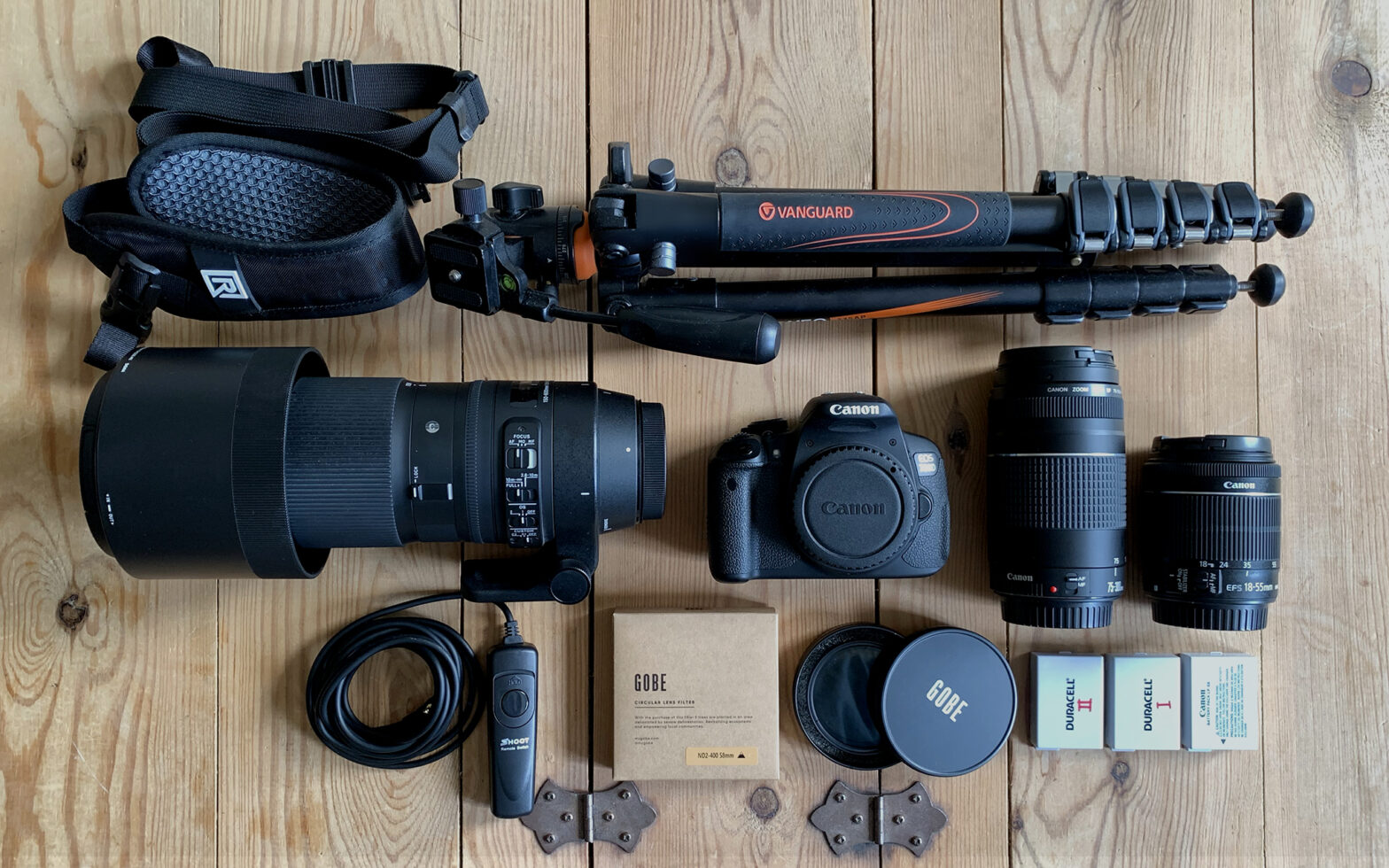
About three and a half years ago I bought myself a DSLR. It was something I’d been meaning to do for some time, and when I finally got round to it I spent a couple of weeks doing the research. I actually love this bit! You make the decision to take the plunge, you know that in a week or two you’ll be the proud owner of a sparkly new toy, and that period in between, reading reviews, making comparisons, downloading manufacturers’ brochures and spec sheets et cetera, is really exciting for me! It’s the same sense of anticipation that I remember feeling back in 1976, when I’d been saving my pocket money for weeks before finally getting my mitts on a Space: 1999 – 360 Eagle Freighter.
So after much deliberation, I called in to a local high street camera store and bought a Canon EOS 700D. It came with two kit lenses: an 18–55mm f/3.5–5.6 and a 75–300mm f/4–5.6. The 18–55mm is something of a workhorse lens, you could say. It’s okay for a bit of macro, it’s okay for a bit of wide-angle stuff. The 75–300mm has been great for taking those first tentative steps in wildlife photography; it’s got a good reach, and the maximum f/5.6 aperture at 300mm isn’t bad, it allows a good bit of light in and gives a nice soft bokeh effect. However, more about that shortly.
Around the same time I bought a tripod because, you know… if you’re going to splash out on a DSLR, you’re going to need a tripod to go with it, right? I opted for a Vanguard VEO 235AP which, if I’m honest, hasn’t lived up to expectations. It’s pretty compact, folding up to no more than about 18 inches, and it’s reassuringly weighty, but despite the latter it’s not as stable as I thought it would be, particularly when it’s extended to its full height. The legs are a real faff to extend, and the wing-nuts that you use to adjust the head, are too small to be able to get any leverage on, and one is so stiff it’s almost impossible to undo; if it’s gone unused for any length of time, I’ve even had to use pliers to loosen it! But I suppose at the time I’d probably made a subconscious decision not to spend too much on the tripod in case it ended up lying on the shelf in my spare room the whole time. Lesson learned: you get what you pay for.
So, that 75–300mm lens… well over the last couple of years, the more I’ve used it the more aware I’ve become of its limitations. Don’t get me wrong, I think it’s a great starter lens as I mentioned above, and I’ve been able to get some lovely shots with it. But as I’ve begun to take my hobby a bit more seriously, there are a couple of issues that I’ve become aware of with this lens, that really bug me.
First of all, most of the time it’s nowhere near as sharp as I’d like. It has no image stabilisation, so at 300mm, you really need to be using a tripod, or if you’re using it hand-held you need a shutter speed of at least 1/320 sec, ideally faster still, and even then the images seem to be a bit soft. Secondly, and forgive the techy jargon, chromatic aberration can be a real problem. Chromatic aberration is the coloured fringing (usually magenta and green) that you can sometimes see around the edges of high contrast areas of your image. I’m not overstating it when I say that it’s ruined some otherwise decent shots. There’s only so much you can do in post, to mitigate this.
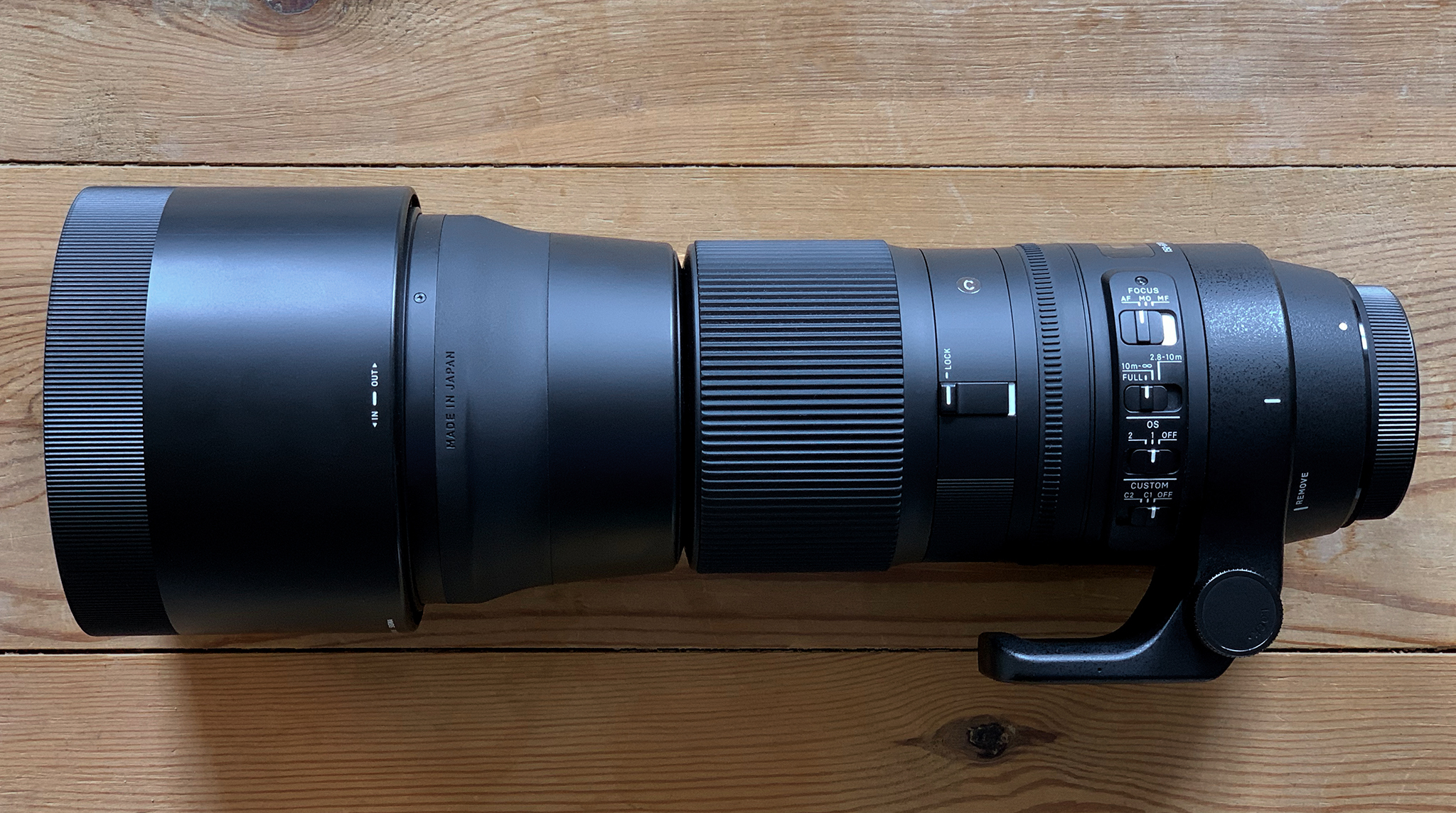
With that in mind, I recently invested in a new telephoto lens. I did all the research again, and I’m pretty confident that I’ve got the best lens that I could for the amount of money I was prepared to spend – the Sigma 150–600mm f/5–6.3 Contemporary. What a beast! I mean, it’s heavy for starters – over 2kg with the tripod mount, and it’s big – 17 inches long at its full extent with the lens hood attached. It took some getting used to, to use it hand-held, but once I was comfortable with that (having the right sort of strap helped) it became my go-to lens, particularly for wildlife photography. It has superb image stabilisation, tack-sharp focusing and a really impressive reach. It wasn’t cheap by any means, but in fact through Amazon I was easily able to arrange payment for it in monthly instalments. Honestly… I haven’t looked back.
Other bits and bobs that I’ve bought recently: a cable release, an air blower, a Black Rapid shoulder strap, additional camera batteries and most recently a Gobe* variable ND circular filter.
As an aside, I rather like Gobe; their ethos, based on sustainability, reforestation and improving the ecosystem and the natural environment is all very worthy. I know the word worthy is a bit of a loaded term these days, but I mean it quite genuinely. They pledge to plant five trees for every purchase of one of their products, in Madagascar, Nepal, Haiti and Indonesia. Great stuff.
So that’s about it. I’ve got a few lens pouches, too, but essentially that’s all my stuff… for the moment. I’m already thinking about adding to it, but I’ll save those thoughts for another post.
* Since writing this post Gobe has been renamed Urth, while still retaining their green credentials.