The photography bit
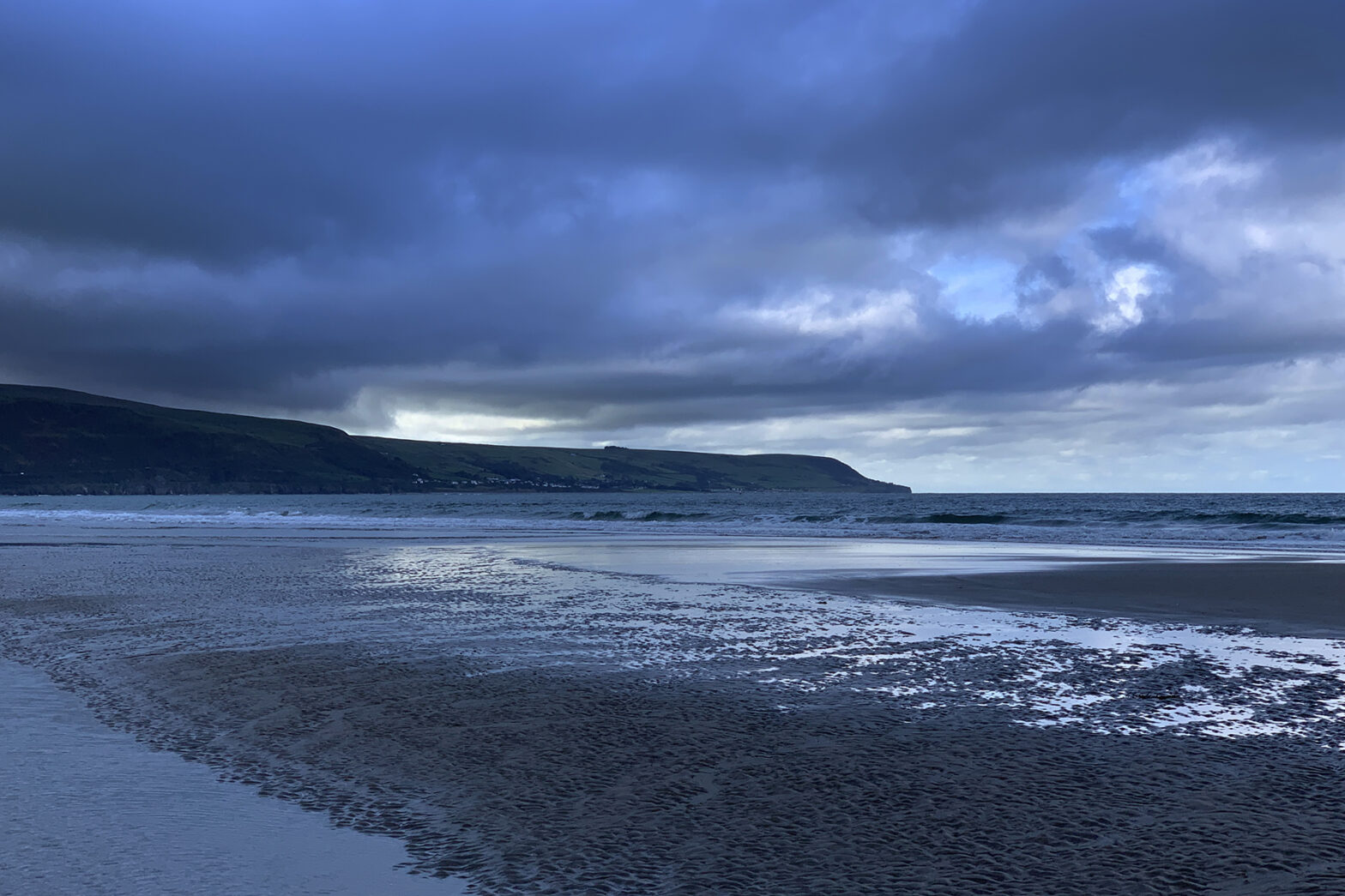
The weather’s been good to me lately (thanks, Weather, you magnificent son of a gun)! There was wall-to-wall sunshine on my recent trip to the Lake District, apart from the final morning when I got soaked just in time for the homeward journey. And having just returned from a week in Barmouth in North Wales, I can report that once again, apart from the last day, glorious blue skies and searing hot sun were the order of the day – a real scorcher. I even had to buy a neck gaiter – indispensable apparel it turns out, when like yours truly, you have the semi-translucent skin of a blind cave fish.
Aside from it being a very enjoyable holiday, the visit to Wales also represents my first tentative steps into project 2, film photography. There was a bit of landscape photography too (project 1), and actually the two will inevitably link up, I’m sure. However, film was the primary focus of attention on this occassion; results were mixed. I did some hiking too, which was both sketchy and rewarding. I’ll come to that ere long.
Let’s get straight to it then, gentle reader. The first thing to say is that I found the whole process of taking photos on film immensely enjoyable. I cannot overstate this, it was an absolute joy! The camera I use is a Mamiya C330 TLR, medium format (described in an earlier post) which takes 120 film and shoots square format 6×6 photos. It has no automatic functionality at all, nary a one. It’s entirely mechanical with no built-in light meter and no autofocus; everything you do with the camera, every setting you adjust, needs to be done manually. I love this about it – it’s part of the attraction for me I think. It forces you to slow right down and pay far more attention to what you’re doing. I know most good DSLR cameras allow you to take full manual control too, and in fact this is how I use my own DSLR most of the time, but there’s just something about deciding on the aperture, taking a meter reading with a separate light meter, then dialling in the settings yourself, which feels like you’re taking back control somehow. I mean, I’m not sure I can quite put my finger on it yet, but it’s just a great feeling. It feels tactile and tangible, like you’re more engaged, almost as though you’re a symbiotic part of the process. There’s a bit of magic involved, I’m sure.
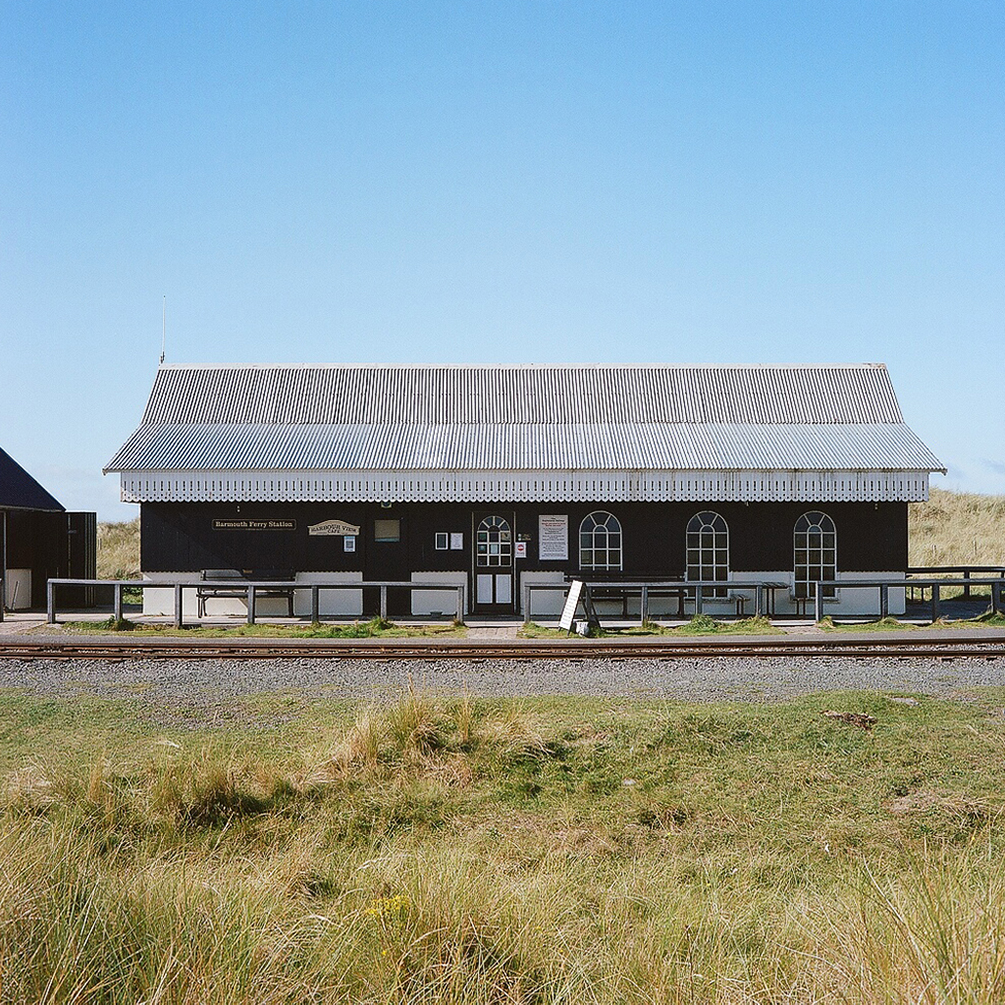
Kodak Portra 400 | ƒ/22 | 1/250sec | 80mm
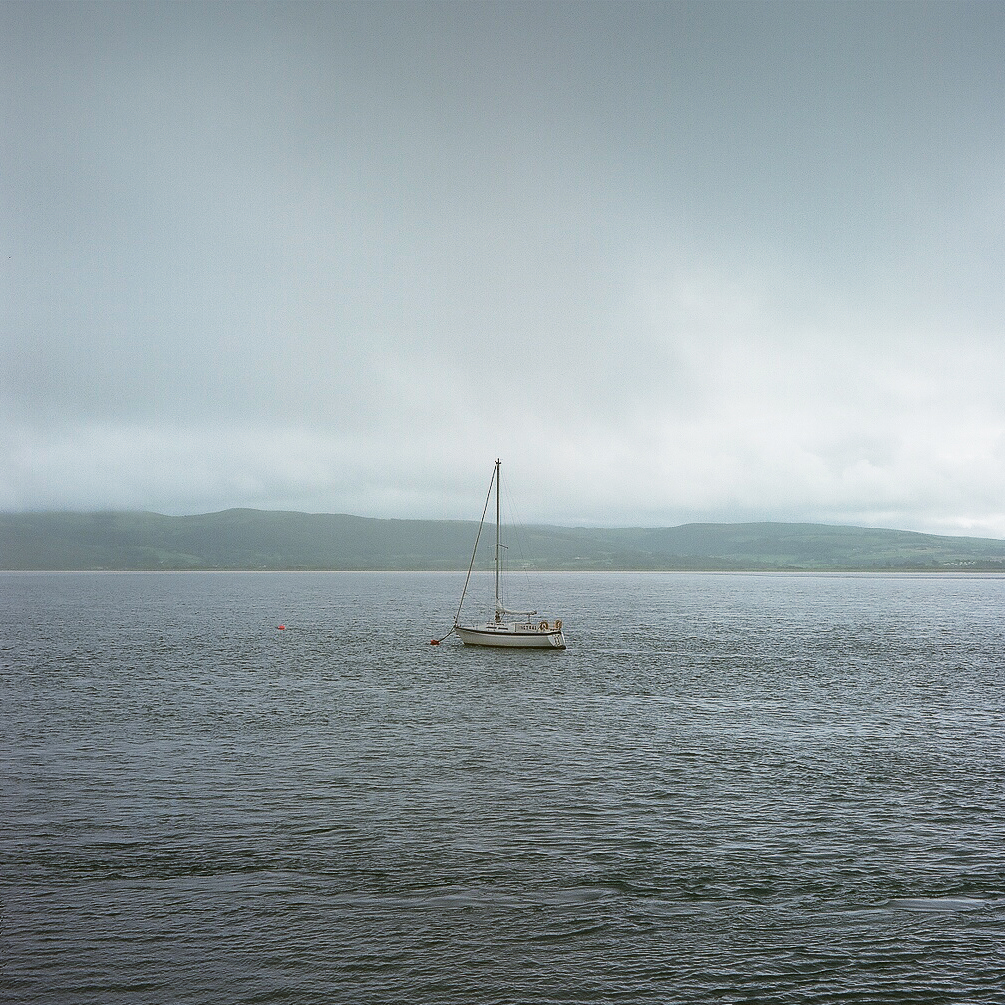
Kodak Portra 400 | ƒ/22 | 1/125sec | 80mm
Well that’s quite enough of me getting all lyrical. Let’s get down and dirty. The two photos above are the best shots from the week. I fired off two rolls of Kodak Portra 400 (24 frames in total), which to be honest was perhaps not quite the right film for the conditions most of the time. I’d rather have used Portra 100, but 400 was all I had with me. I’d planned for an overcast week, given that it was late September… I just hadn’t banked on an Indian summer!
The ferry station café photgraph above was difficult to compose, and I’m not keen on the foreground – it’s a bit chaotic and not terribly interesting; I don’t think it adds anything to the shot. If I’d have been a little cleverer about it I could have narrowed the depth of field, so that the grass was a little softer, and that might have given me a bit more separation. But I wasn’t cleverer. Another option would have been to get closer to get less of the grass in, but in doing so I wouldn’t have got the whole of the café in frame. I could have tilted the camera upwards slightly, but that would have distorted the vertical aspect. Still, other than the foreground, it has a nice symmetry and simplicity to it, which I’m fairly pleased with and I like the horizontal emphasis of the composition. A pano would have suited this scene better, but that wasn’t possible of course. Still, the memory of taking that shot will stay with me. It was a staggeringly hot day with not a breath of wind, and there was absolutely no one around. The composing and the set up were all done at a quiet, leisurely pace which was just pure tranquility.
The photo of the boat has a minimal quality that I really love. It has a quietness about it that I’m really pleased with, which is more to do with the simplicity of the composition. In actual fact the weather had really turned when I took it, on my final morning of the holiday, and the rain was really coming down, which you don’t see in the photo. There’s a lot to be critical about – it’s a pity there wasn’t a bit more drama and contrast in that sky, there’s a real lack of anything going on there. The sea was starting to get choppy too, which creates a bit of tension in the scene unfortunately. But all of that being said, I still rather like it, and I wonder if you’ll agree that there’s a quality… something indefinable about it… that I’m not sure a digital photograph would convey. Am I just romanticising, and seeing something in it that’s not really there? Perhaps. But perhaps it doesn’t matter.
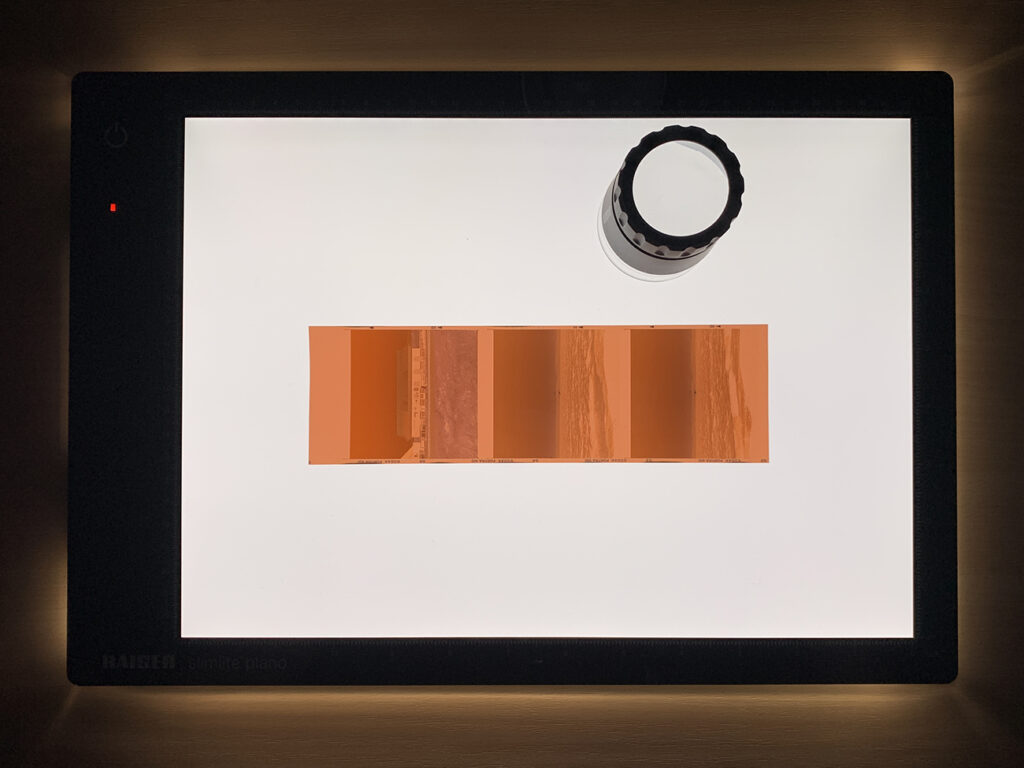
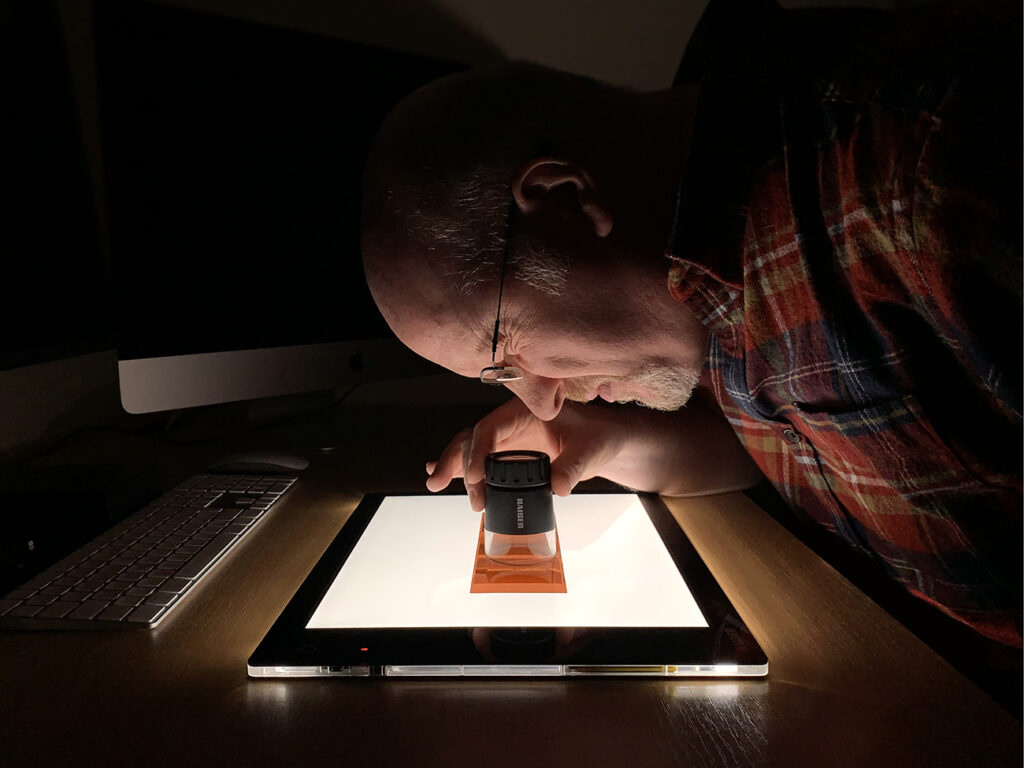
The rest of the shots from the two rolls were hit and miss; it seems that I had some issues with underexposure in most cases, which can have various consequenes, such as the typical washed-out look, and the rather less obvious muddy brown cast, but I think I know why this was happening. And actually, according to what I’ve heard since, from people who I trust implicitly in this regard, Kodak Portra is far more forgiving of overexposure than it is of underexposure, so I know that in future I can err on the side of the former if there’s ever any need to do so. The whole exercise was very much an experiment anyway, and in that sense I’m pretty philosophical about only having a couple of good photos to show for it… I mean it’s not like it’s a terribly expensive game, this film photography lark.
That was a lie, it is a terribly expensive game; eye-wateringly so… it’s a terribly, eye-wateringly expensive game. But I’m still cool with it. Still love it.